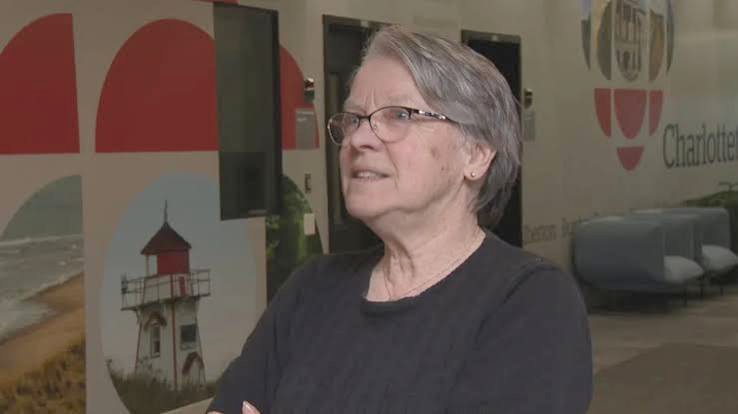
Another in depth IRAC Review Presentation from National Farmers Union – PEI, presented by NFU Director, Rita Jackson.
Introduction
In the spirit of Reconciliation, The National Farmers Union (NFU) would like to acknowledge that the land upon which we stand is unceded Mi’kmaq territory. Epekwitk (Prince Edward Island), Mi’kma’ki, is covered by the historic Treaties of Peace and Friendship. We pay our respects to the Indigenous Mi’kmaq People who have occupied the Island for over 12,000 years; past, present and future.
Good evening Commissioner Francis. The National Farmers Union thanks you for the opportunity to present to the review of Island Regulatory and Appeals Commission (IRAC) today.
The NFU has many concerns with matters under IRAC’s jurisdiction. Due to the timing of the commission, and the constraints placed upon us, we will focus today on the review of IRAC and its responsibility for the Lands Protection Act (LPA)
The NFU is an organization of, and for, farmers and farm-workers in Canada, working together to democratically achieve agricultural policies that ensure dignity and income security for farmers and farm workers while protecting and enhancing rural environments for future generations. We represent farmers who operate all scales and types of farms across Canada. We have advocated for economic dignity, social justice and ecological health for over 50 years.
Since 1972 the NFU District 1, Prince Edward Island, has developed and presented policies to Government regarding the land.
In 1982 the Angus MacLean government enacted the Lands Protection Act (LPA) as a legislative foundation, to protect Island Farm Families, from widespread corporate acquisition of agricultural land. The NFU District 1, was completely supportive of Government’s bold initiative. At the same time, the NFU advocated that the government also enact a Land Use Plan that included Land Zoning, identifying lands for: farmland, forestry, urban development, housing, recreation, green spaces and industrial. Land Zoning was, and still is, a way to ensure farmland access for future generations of farmers. The LPA is the envy of many Provinces.
Spirit and Intent of the Lands Protection Act
The NFU often speaks of the spirit and intent of the Lands Protection Act. Here is a definition of what we mean:
The spirit of the law refers to the underlying intent, purpose, and principles behind a legal rule or statute, as opposed to its literal or strict interpretation. It embodies the core values and objectives that the law aims to uphold, such as justice, fairness, and the common good. While the letter of the law focuses on the precise wording and technicalities, the spirit of the law seeks to capture the broader moral and ethical framework that guides its application.
I refer you to the PEI LPA Article 1.1(c)
The NFU expected IRAC to enforce the Spirit and Intent of the LPA. Unfortunately, IRAC has failed to uphold the Spirit and Intent of the LPA. The land grabbing by corporations and other bodies has not been stopped.
Farmland is a resource which we borrow from our children NOT a commodity to be bought and sold
The protection of farmland is not only an issue for farmers. We only have one source of water and that is in the ground under our feet. Climate change is threatening the lands of the Island; not just our shores, but inland as well. We must take into consideration many aspects of land as a common good; from the perspective of ancient cultures, ancient growth, clean rivers, farmland, beauty of the landscape, the future of our children, the power of the people to give the land a voice, and democratic processes. WE SPEAK FOR THE LAND
Nowhere is the protection and nurturing of the land more necessary to maintain the common good than in the need to preserve farmland and to keep that farmland in diversified food production.
The National Farmers Union has concerns with the Island Regulatory and Appeals Commission’s role in this.
The Island Regulatory and Appeals Commission (IRAC) has the duty to apply and enforce the Lands Protection Act. The word Protection is in the name of the Act. We have seen that farmland is not being protected. As presented in a recent CBC report, that stated, PEI is losing farmland at such a rate that, if allowed to continue, half of PEI farmland will be lost by 2050.1
Commissioner Francis, you were appointed to ensure the Island Regulatory and Appeals Commission (IRAC) remains effective, transparent, accountable, and aligned with modern best practices in regulation and administrative decision-making.
The facts speak for themselves. The NFU considers IRAC not effective, not transparent, not accountable, nor aligned with modern best practices in regulation and administrative decision-making, regarding farmlands.
Commissioner Francis, all of this is wrapped in a culture of secrecy and potential conflict of interest. The fact, that you have been tasked to review IRAC, proves that Islanders’ trust with this tribunal has been eroded.
To illustrate this loss of trust, in March of 2019, three Irving owned Companies were denied the purchase of Brendell Farms by the Wade MacLauchlan Cabinet.
A 22 hundred acre parcel of farmland in Central Queens County. Later, in June of 2020, this same parcel of land was purchased by Haslemere Farms, then re-named Red Fox Acres; both of these companies are tied to the Irving Family. IRAC indicated to Government that the land should be divested and then reversed that decision. No explanation was given and no report was made public.
In 2016 – 2018 an investigation into the land transactions involving Buddhist organizations in Kings County was started and conducted by IRAC. In January of 2018, the investigation was (ended) terminated, without explanation. IRAC’s published annual reports indicated no budget line for either of these two investigations. In fact, they are not mentioned at all. Only in response to a subpoena issued by the Standing Committee on Natural Resources and Environmental Sustainability in October of 2025, did the Commission reveal to the legislature and the public, that no report existed of this terminated investigation.
These two examples, reveal the shroud of secrecy and the lack of accountability to Island taxpayers. This behaviour seems to be in contravention of Article 12.(5) of the LPA. Why is there no report? Where are the supporting documents?
The LPA was amended in 2021, 9.1, the effect of direct or indirect control of corporations and land ownership was defined.
Article 9.1(1) For the purposes of this Act, two or more corporations that are directly or indirectly controlled by the same person, corporation or organization are deemed to be one corporation. Also known as Beneficial Ownership.
Article 9.1(1) is a significant regulation within the LPA. IRAC has shown little appetite to enforce it.
A recent CBC investigative report concluded that 20 corporations with ties to the Irving family currently own more than 12,000 acres of farmland on P.E.I.2
The Financial Post has stated that “some reports allege up to 17,000 acres may now be linked to Buddhist organizations or their affiliates.” 3
IRAC has authority and full regulatory powers over the Lands Protection Act. However, IRAC chooses to not enforce this section of the Act. Why is that? Is it because of a conflict of Interest?
Conflict of Interest is always a concern in the fair governance of any quasi-judicial tribunal.
It is obvious to ordinary Islanders, that when lawyers are appointed by the Government to serve with IRAC, the same lawyers, who have dealt with the lands transactions of various clients, that IRAC rules on, there is an appearance of conflict. Thus, there is a conflict.
Natural justice would require that IRAC exercise prudent, balanced, and steadfast stewardship to ensure the protection of the province’s fragile ecology, environment, and lands.
To ensure that the Lands Issue is handled in a trustworthy, transparent, accountable way and not wrapped in a shroud of secrecy.
The National Farmers Union recommends:
The Government declare that Island Farmlands are a Resource.
Remove the Lands Protection Act (LPA) and the Planning Act from IRAC’s responsibility.
Create, a PEI Lands Commission similar to British Columbia’s Agricultural Land Act, with authority to enforce the Lands Protection Act and the Planning Act.
The newly created PEI Lands Commission must have a clear, well-defined and enforceable conflict of interest policy. (Similar to the BC Agricultural Land Commission)
An all-party, (PC, LIB, GRN), PEI MLA Members Committee, must be established, tasked, to create appropriate Job Descriptions, in consultation with the Public Service Commission, with the budget and staff to advertise across Canada, to hire Lands Commission Officers as well as provide oversight on the hiring of these officers. The multi-party oversight will eliminate the Culture of Secrecy, Conflict of Interest and Political Patronage.
Candidates for the PEI Lands Commission will be chosen based on their knowledge in matters related to agriculture, land use planning, local government and first nations.
This PEI Lands Commission must have sufficient resources and clear jurisdiction to enforce the LPA and Planning Act.
Freedom Of Information and Protection of Privacy must apply to the PEI Lands Commission, This will ensure that ordinary Islanders will have public oversight. (see BC LCA)
The new Lands Commission shall be responsible and shall report to the Legislature of PEI.
IRAC has a duty to protect PEI lands, IRAC has failed PEI Lands.
The position of the NFU on this matter has remained consistent throughout numerous submissions to Government.
Respectfully submitted,
National Farmers Union
District 1, Region 1