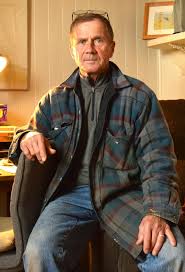
If you want a clear picture of just how contradictory our government’s actions are to our PEI wetland conservation policy, take a minute to read this well-researched article by Boyd Allen.
As always, please help us raise awareness by sharing this article.
NO NET LOSS
Natural wetlands cover approximately 5.1% of the Island. These wetlands include bogs,
fens, marshes, swamps and shallow waters. Wetland functions are defined as “the
natural processes and derivation of benefits and values associated with wetland
ecosystems”.
Wetlands play a vital role in supporting biodiversity. They serve as habitats for
numerous species, including migratory birds, amphibians, and unique plant life. In
addition to being among the most productive and biologically diverse ecosystems on the
planet, their importance spans ecological, economic, social, and cultural dimensions.
They are essential for the sustainability of natural systems, and human and community
well-being. This is supported by a guiding principle of the Canadian Federal Policy on
Wetland Conservation: “they are a priority requirement of environmental conservation
and sustainable development efforts”.
The recognition of this value is reflected in the fundamental change over the last few
generations in how Islanders’ view wetlands. As an illustration of this, Jean-Paul
Arsenault stated in his recent blog, that the 16 members of the Round Table on
Resource Land Use and Stewardship in the mid-1990s “spent much of their time
debating issues around water and the protection of watercourses and wetlands. There
is a direct connection between the Round Table’s recommendations and the rules in
place today”.
The PEI Wetland Conservation Policy was created in 2003. This policy states “In
recognition of the historical and ongoing wetland loss, concerted efforts are required to
conserve and protect remaining wetlands.” It is based on a “No Net Loss” framework.
No Net Loss is defined in the Federal Policy as “maintaining the total acreage and
function of wetlands”. This Policy explicitly aims to avoid impacts first, minimize second,
and compensate last—maintaining wetland area and function through structured
mitigation sequence. The regulatory framework now in place has been administered
and tested in court.
The three steps of this policy are as follows:
1.Avoidance: Development proposals will avoid wetlands. In cases where
wetlands would be infringed upon, wetlands will be avoided or alternate sites
chosen.
2. Minimization: In the rare case where, after all avoidance options are exhausted
and impacts on the wetland are unavoidable, potential negative impacts on the
wetland will be minimized to the extent possible.
3. Compensation: The developer (proponent) will compensate for any and all loss
of wetland area, function and value resulting from development.
According to the provincial Environmental Protection Act, if a proposal seeking a
development permit is considered to be “an undertaking”, this initiates the creation of an
Environmental Impact Assessment (EIA), public notices and subsequent public
meetings.
Two recent developments provide insight into this designation. The proposed Ocean
View Golf Course in Summerside was not deemed an undertaking. Therefore, there
was no EIA and no public notice or meeting. The Minister considered the proposal to be
“in the greater public interest”, thus bypassing the first two steps of the wetland policy.
Assessing the appropriate compensation was then left to the Minister.
The Big Cape Links project in Monticello on the other hand, though also deemed “in the
greater public good” by the Minister, was considered an undertaking. An EIA/Public
Notice/Public Meeting process was triggered. This resulted in the Minister providing the
developer with a conditional approval to proceed.
In both of these proposals, the "consideration of the greater public interest" has been
applied to bypass critical components of the Wetland Policy. It is the instrument with
which the imposition of executive discretion depends. The language in the policy is: “in
the greater public interest such as the Confederation Bridge or concerns for public
safety as in the case of highway or bridge construction". Neither of these private
undertakings remotely met this definition.
The province’s 2023 Interim Coastal Policy stated: “The provincial wetland conservation policy
is currently not supported by legislation”. A recent research paper by AR Siders posted by the
PEI Watershed Alliance concludes: “The most effective driver of change is not creating policies,
but fully enforcing existing ones – without exceptions, exemptions or loopholes”.
Both of these statements are valid. If the existing regulatory framework did support the policy, then “No
Net Loss” would not be an aspirational, negotiable concept. It would be embedded in the language and
easily enforceable. If the policy was fully enforced, then there would not be such inconsistent outcomes,
dependant on the Minister’s discretion.
It was recently announced that the Wetland Policy was being “reviewed”, presumably within the
Department of Land and Environment. It would be worthwhile for it to be “tweaked”, to borrow a word
used by former Minister Arsenault, in order to address any procedural shortcomings and reflect the
increased value of wetlands in the face of climate change. Indications are however, that the aim is to
“streamline” the process through widening the Minister’s discretionary scope.
The provincial wetland policy, even in its current form, uses strong language on the
value of wetlands and the necessity to conserve them. Be this at it may, how this policy
is being administered paints a much different picture.
A key first step to remedy this would be the inclusion of some form of meaningful public
oversight. There is such a body within the Wetland Policy. It’s duties include
“Assessments of wetland function and value, class, area, geographic location, time
frame, monitoring requirements, estimates of wetland loss and recommendations for
wetland compensation and associated costs will be made by a committee of wetland
experts comprised of representatives of the Federal (Canadian Wildlife Service) and
Provincial governments (Fish & Wildlife Division), and the major non-governmental
organization involved in wetland conservation in the province (Ducks Unlimited
Canada).” There is no evidence of this committee’s existence. Without it, the vague
defining language within the legislation and regulatory framework allows unlimited
scope of ministerial interpretation and vulnerability to political influence.
Another necessary step would be to establish a transparent method to assess whether
a proposed development constitutes an "undertaking”, with criteria specific to
watercourse and wetland protection.
Wetland is irreplaceable. We need to support and enforce a Wetland Conservation
Policy which, though designed over twenty years ago, is even more relevant today. We
must reinstate the “Public” in the “Greater Public Interest” – without exceptions, exemptions
or loopholes.
Boyd Allen
Boyd Allen is a board member of the Environmental Coalition of Prince Edward Island. This is
the second of three pieces on water.