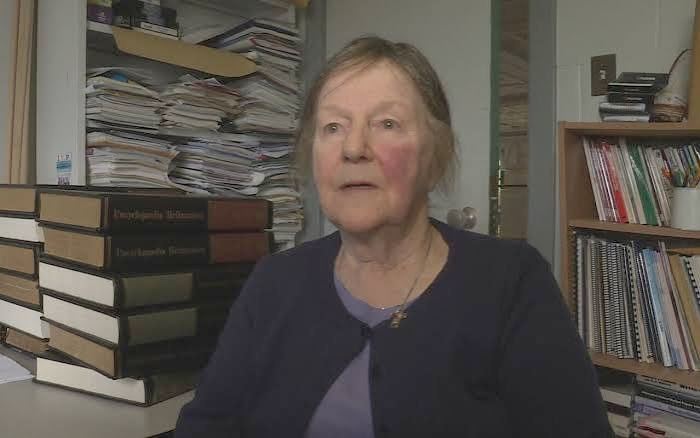
Thanks, Mary Boyd, for this submission!
Chair, Independent Commission Reviewing the Function and Responsibilities of the Island Regulatory and Appeals Commission (IRAC)
Mr. Chair,
Given the short timeline for feedback on IRAC and busy schedules, we can write only a few points outlining our major concerns. We agree with the presentations made to the Commission by the Coalition for the Protection of PEI Lands and the National Farmers’ Union.
We acknowledge that the land where Prince Edward Islanders live and gather is unceded Mi’ Kmaq territory, Epekwitk, covered by the historic Treaties of Peace and Friendship. We pay our respects to the Mi’Kmaq people who lived here for thousands of years; who live here presently and will live here in their home in the future.
Some members of the MacKillop Centre for Social Justice have ties with the former Social Action Commission of the Diocese of Charlottetown, which presented several briefs on land use and ownership over the years to Commissions on Land Ownership and Use and have always advocated for a strong Lands Protection Act. Today we agree with the point made by the Coalition for Preservation of PEI Lands, that the scope and impact of IRAC’s operations, and its complex relationship with all levels of government, “must allow the public to hold it to the same standards of good and ethical governance.” We also agree with the Coalition’s approach of looking at the Commission through the lens of “transparency, accountability, and public oversight.”
We agree that IRAC’s current practices do not reflect transparency. The Coalition states: “Under the Lands protection Act, all land transactions involving non-residents and corporations must be investigated by the Commission. It sends its recommendations on every application to the Executive Council, which makes the final decision. What these recommendations are, and why they are made, are currently protected under the blanket of cabinet confidentiality, as are the reasons cited for its decisions.”
We recall the words of Dr. Ian MacQuarrie. “There are as many holes in the Lands Protection Act as there are in a Swiss Cheese.” He stated that the main reason for this was that Executive Council makes the final decision under the blanket of cabinet confidentially.
On accountability, it is our believe that IRAC has failed the principle of the Common Good of society by its failure to share information on such issues as Brendel Farms and other issues that impact Islanders and our communities.
On public oversight, we follow the principle that citizens have the right to participate in decisions that affect their lives. This is not the case with IRAC. It is very unfortunate that IRAC does not consider meaningful public oversight. It also allows conflicts of interest, and this is not acceptable either in society or in public institutions. The “culture of secrecy and exclusivity” must go. IRAC must be replaced by a new model. This is especially true of its responsibilities in relation to the Lands Protection Act and the Planning Act. We need a new commission that is transparent, accountable, involving public participation and with strong conflict of interest measures. Applying band aids to the current model won’t work.
We agree with the Coalition for the Protection of PEI Lands that: “We need to create a trustworthy, independent tribunal, capable of adjudicating the conflicts brought on by development pressures, centralized land use planning and continued loss of invaluable agricultural land, to name a few. We hope that this review will provide the impetus to develop this tribunal.”
We agree as well with the National Farmers’ Union (NFU) brief. We have always believed that the land is a non-renewable resource that we have borrowed from our children. We observed over the years how quickly the land base is disappearing, that land grabbing by corporations and other vested interests must be stopped. The rate of farmland loss is alarming. Questionable ownership and practices drain our water – also non-renewable – and effect the environment. A new agency will need to pay attention to Mother Nature and the warnings we are currently receiving. Farmland must be protected. We also support the concept of beneficial ownership, “that two or more corporations that are directly or indirectly controlled by the same person, corporation or organization are deemed to be one corporation,” as the NFU defines it.
Finally, it is interesting that in your closing remarks at the end of the public hearing, you are not mentioned by the Guardian, July 8/26 as including Land among the many ways that IRAC touches every one of us.
Land is such an ethical and spiritual issue because it touches our souls and our identity in an incredibly special way – much the same way as it touches the indigenous people. A blow to the land is a blow to all and we must admit that we have been very careless. Land is a non-renewable resource. Rather than being a leading element of community life, of the common good, it has become a money issue, regarded by some as a private source of wealth if they are fortunate enough to acquire it. But at what cost to future generations?
Respectfully submitted,
Mary Boyd