PEI Energy, land use top of mind for Islanders as review into IRAC’s responsibilities begins
Review aims to ‘rebuild public trust, which has been eroded,’ says commissioner
Tony Davis · Jul 07, 2026 6:00 AM ADT | Last Updated: 1 hour ago
Brennan McDuffee, community organizer with advocacy group Energy Democracy Now, says a completely separate regulatory body from IRAC should be created to deals with electricity and energy. (Tony Davis/CBC)
Social Sharing
Prince Edward Islanders want to see the regulatory body that oversees land, gas prices and energy rates in the province work better — or new agencies created to handle specific issues.
An independent commission is currently reviewing the function and responsibilities of the Island Regulatory and Appeals Commission. P.E.I. Premier Rob Lantz ordered the review back in May.
About 100 people piled into a room at the Rodd Royalty Inn in Charlottetown on Monday afternoon to voice their concerns about IRAC.
Some in attendance said they want to see more renewable energy options in the province, and raised concerns about Maritime Electric’s $411-million application before IRAC to add two diesel-powered generators to strengthen the Island’s power grid.
“The energy portfolio is evolving rapidly and it’s subject to a lot of different areas that concern folks,” said Brennan McDuffee, community organizer with advocacy group Energy Democracy Now.
“There is energy capacity, there is also the effect of climate change. And there are kinds of rapid developments in what different energy technologies are capable of.”
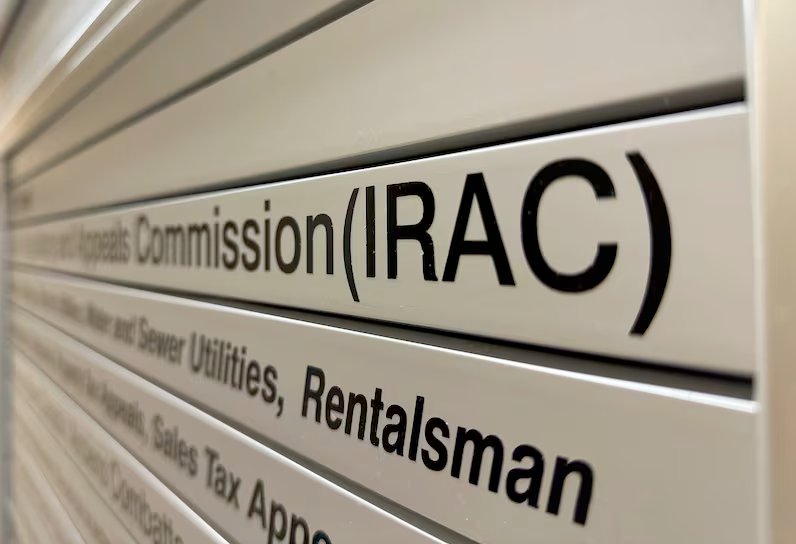
Sign for the Island Regulatory and Appeals Commission.
An independent commission investigating the roles and responsibilities of IRAC is accepting written and audio feedback until the end of July. (Aaron Adetuyi/CBC)
An independent report commissioned by IRAC suggests that installing a 100-megawatt battery energy storage system could achieve similar electricity capacity for an estimated $271 million. That option is one Energy Democracy Now wants to see explored.
McDuffee said a completely separate regulatory body should be created that deals specifically with electricity and energy.
He said IRAC’s staff work hard, but they oversee almost every aspect of Island life with the rules they set.
“Not one person can be a specific expert in all those areas,” McDuffee said.
He noted that P.E.I. doesn’t have a public intervener’s office, something that’s in place in almost every other province.
Another issue raised multiple times during Monday’s public meeting was land use and how it’s regulated.
“We’re very concerned about … the spirit and intent of the Lands Protection Act and the fact that it has been bypassed. It has been moved around. We’re not protecting the land as we should be,” said Boyd Allen with the Coalition for the Protection of P.E.I. Lands.
“You have farmland being consumed, you have a sensitive environment being consumed, you have wetlands being infilled. And we have a strong suite of regulations to protect them, but we don’t have the will within the government to do it.”
Man with glasses in a blue knit hat and grey corduroy overalls stands in front of a small shed with trees in the background.
‘I would like to see this review provide the impetus to break land-related issues from IRAC and establish an independent tribunal that is based on transparency, accountability, meaningful public oversight and robust conflict of interest rules,’ says Boyd Allen with the Coalition for the Protection of P.E.I. Lands. (Sheehan Desjardins/CBC)
Allen said he’s heard from many people who have lost faith in IRAC, with much of that mistrust related to how the commission handled a 2018 investigation.
In 2025, MLAs on a legislative standing committee learned that the long sought-after report outlining the details of IRAC’s investigation into land holdings, including those of Buddhist groups in eastern P.E.I., was never completed.
“Quite frankly no one was surprised that there was not a report on this investigation,” Allen said.
“By their silence, one presumed this investigation had run its course and there was nothing untoward discovered. And ultimately what we found eight years later is that it was simply not completed.”
WATCH | P.E.I. premiers answers questions about IRAC review:
Allen said he’d also like to see a separate body created to deal with land use.
“I would like to see this review provide the impetus to break land-related issues from IRAC and establish an independent tribunal that is based on transparency, accountability, meaningful public oversight and robust conflict of interest rules,” he said.
Former Malpeque Liberal MP Wayne Easter is part of a group that’s calling for a federal investigation into land holdings on the Island.
Last October, P.E.I. Premier Rob Lantz also asked that the RCMP and Canada’s anti-money-laundering agency look into allegations of foreign interference and money laundering involving “certain Buddhist groups” in the province.
“Islanders deserve to know who is investing in our land, what the long-term intentions are and whether any external political interests could be influencing local decisions,” Easter said during Monday’s meeting.
“We are living in a time of foreign influence.”
Rory Francis, the commissioner of the independent review into IRAC, said the process is still in its early stages.
“People want to feel that decisions are fair and that the public can trust that IRAC is working in the best interest of the people that have a concern,” Francis said at the meeting.
“This all kind of goes into the big hopper that we have where we’re gathering information, feedback.”
He noted that there hasn’t been a review of IRAC in 35 years, and added that he hopes the process comes to some firm conclusions.
“It’s to rebuild public trust, which has been eroded,” Francis said.
The commission is accepting written and audio feedback until the end of July. Francis said he’s confident the review will be completed by November