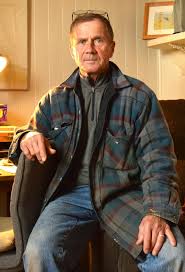
Many thanks going out today to Coalition member, Boyd Allen, who reveals the reality of a government lacking the political will to protect our land and water. Please read and share!
THE YEAR THAT WASN’T
As 2025 draws to a close here on the Island, it feels as though our political leaders have not only wasted this year but taken steps backward. Proroguing the legislature, abbreviating the fall sitting and pushing our third premier of this year into the
limelight doesn’t inspire Islanders’ faith in their government. Resignations of senior cabinet ministers and reemergence of others displays personal career aspirations rather than good governance.
A canary in a coal mine is cited as an early
warning of danger. Our environment has had a tough year, and from it a veritable opera of canaries has taken flight. Land and water are the two interconnected foundations of life. Regulatory
frameworks designed to protect both of these were treated as obstacles to be overcome over the year that was by those mandated to enforce them. The infilling of 27 acres of wetland was justified by equating the whim of a golf course developer
with “the greater good.” The province’s “no net loss” wetland policy was ignored.
The irrigation strategy, born from the Water Act, was rolled out in a drought without adequate oversight, employing vague terms of reference, no long-term strategy and no evidence of adequate oversight. A third-party governance structure, a key component of The Water Act and committed to in the Irrigation strategy, is nowhere to be seen.
In January 2023, the province appointed a 12-member Forestry Commission, tasked to create a Forest Recovery Plan for Prince Edward Island in the wake of Fiona. After an extensive process, this commission’s final report was completed and received by the province in March of 2025. The report contains 14 time-sensitive recommendations aimed at improving the health and resilience of Island forests. These recommendations are col-
lecting dust.
An Island-wide land use plan has been recommended by an array of public bodies for generations. The provincial government began actively promoting its creation in 2021. In 2024 a robust public consultation to lead to its creation was
promised and a 2026 finish line was put forward. Despite a consultant being hired and a listless public education effort taking place in 2025, there is no longer a timeline in any public statements nor even a mention of this province-wide plan.
This year a so-called independent tribunal, IRAC, under the weight of a legislative committee subpoena was forced to share information with the public. It reluctantly stated that an investigation into Buddhist land holdings in Kings County did
actually take place from 2016 to 2018. Why it was abruptly concluded, or any details of this investigation remain secret, however. IRAC also revealed that the much sought after report on this inquiry never existed. Despite IRAC’s obvious mishandling of the original investigation, as well as valid questions about
its procedures, capacity and conflict of interest policy, the province chose to task the same tribunal to conduct an inquiry on the same unresolved issues in 2025.
The lack of political leadership and absence of accountability so much in evidence this year carries a heavy cost. A complex regulatory framework is of diminished value when administered in a culture featuring unrestricted executive overreach and undocumented “working policies” designed to circumvent them. Ongoing erosion of public oversight and transparency safeguards allows this to become standard operating procedure.
By the end of 2025 several thousand acres of PEI’s farmland will be gone. Countless acres of woodland will also be gone. There will be as many, if not more, acres of wetland gone. These are irretrievable and their loss unforgivable. It is up to Islanders to demand this not be allowed to continue.
Fixed election date legislation notwithstanding, once the party in power feels it most advantageous, there will be a provincial election this coming year. We must make this election about our
environment. When a candidate arrives on your doorstep, challenge them on their commitment to the protection of our land and our water. Once it’s gone, it’s gone.
Boyd Allen
Pownal