No one works harder to raise awareness about land and water issues in PEI than Gary Schneider. It is fantastic to see Gary continuing to share valuable information about the critical challenges we are facing in a continuing series on our water. Please read and share this first Informative installment.
THE ISLAND AND THE VALUE OF WATER
(Charlottetown)24 Apr 2026 GARY SCHNEIDER Gary Schneider is co-chair the Environmental Coalition of P.E.I. This is the first of a series on issues surrounding water in Prince Edward Island. The next in the series is scheduled for May 1.
FILE
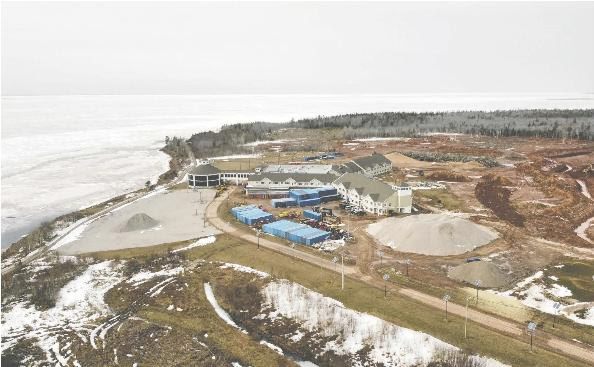
A donation in an apparent exchange for developing an area with wetlands at Ocean View Resort in Summerside is one recent example where P.E.I. water use regulations were called into question. ECOPEI says this is a concerning trend.
Prince Edward Island seems to be at a crossroads when it comes to water. On the one hand, many Islanders believe that it is our most precious gift and that we will suffer greatly if we fail to protect it. On the other hand, it can be seen as just another resource to exploit for the benefit of humans.
I don’t know a single person who doesn’t like water. Anyone with a lick of sense knows how important it is for humans – whether for drinking, as part of some of our best wildlife habitat, providing water for crops, or allowing us to bathe, shower and swim.
Islanders rely on groundwater for 100 per cent of the water we use. We don’t have large lakes from which we can draw freshwater. If something contaminates our groundwater – be it an industrial or a farm chemical, salt, or an oil spill – then we are in serious trouble. Who wants to not be able to drink clean water or take a cleansing shower without toxic chemicals?
WILDLIFE HABITATS
And when I think about some of my favourite wildlife habitats, they are often associated with streams, wetlands and other bodies of water. The Orwell River that runs through the Macphail Homestead, is full of wonderful things. There are lots of lovely old hemlock, white pine and red maple trees and many other species of plants. But it is the bald eagles, the barred owls and the great blue herons that stand out. And the beavers and mink, the red-bellied salamanders and so much more.
When we think of wetlands and waterways, it is not simply that they provide excellent wildlife habit. They also clean and filter water that we humans will eventually use for nourishment and cleansing. I believe that we often overlook the benefits that these areas provide because we know so little about them.
Wetlands are critical habitat for wood ducks and hooded mergansers. We go there to see American toads and all our native frogs. Most of our salamanders spend time in the water as part of their life cycles. And of course, our many species of fish are totally dependent on clean water that is at the right temperature for them to thrive.
How many of us, whether as children or with children, have found a bridge and played games racing sticks from one side to another? Or built dams in trickles of water and pretended to be the next great engineer? Or swam or just cooled off in a lovely stream or pond?
The plants growing along and in waterways – from towering hemlocks to cattails and bulrushes – store carbon and slow down the water entering our larger streams and rivers. When the water slows down, it has less potential for erosion. Plants can also trap nitrogen and phosphorus in the water, using it for their own growth.
WETLANDS IN THE NEWS
Currently, we’re hearing lots about the golf course in Summerside, where the developer initially received permission to develop in a wetland. Then there seems to be evidence that the developer made a “donation” in order to further impact more wetland. There was also coverage in the media of the province violating its own wetland policy when work started on the additional windmills in Eastern Kings and it turns out that someone had missed the fact that there was a wetland within the development area. There have also been questions about another golf course planned for the north shore.
The biggest area of concern is now that the province revoked the ban on high-capacity wells, it appears to be open season on our groundwater. In 2025, there were 60 high-capacity wells in place for agricultural irrigation. In 2026, there have been over 100 new applications for these types of wells.
Some Islanders and our provincial government believe that the provincial Water Act and the watercourse and wetlands protection regulations are strong enough to do the job. But are they really?